Human ROI for healthcare lighting
Your patients run on light. So does your margin.
Earthlight models the Human ROI of circadian lighting for healthcare buildings, turning better sleep, calmer nights, and fewer incidents into the financial language owners, operators, and CFOs already use.
Quantify the return before the lighting gets stripped from the project.
The science
Why light matters in a care setting
Light regulates the human circadian system, affecting sleep, cognition, reaction time, mood, and metabolic stability.
- Higher healthcare exposure
- Fatigue-related errors
- Increased absenteeism
- Slower cognitive throughput
- Retention instability
Lighting is not aesthetic infrastructure. It is performance optimization technology and risk reduction.Read the full science →

The circadian system is calibrated by light: every hour, every employee, every day.
The problem
The CapEx / OpEx disconnect
Lighting is purchased as capital expenditure, but its biological and performance consequences show up in operating budgets for years. Procurement processes rarely connect these layers, so lighting designs get cut during value engineering. When construction creeps over budget, this is where user needs are ignored.
Base case: a 100-person workforce across 200 fixtures. Directional, pre-pilot modeling. Every assumption is stated in the model.
The program
From a measurement to lighting you can defend
Four steps, each a smaller leap than the one before. You measure before you model, model before you pilot, and pilot before you buy, so nothing commits you to the next step until the numbers have earned it.
The proof
The model, tested in real buildings.
Every engagement starts as a number on a spreadsheet. Here’s what happened after the lights went in.
The community
Scientific & engineering community
Earthlight convenes researchers, engineers, and designers at the intersection of circadian biology and performance economics. Detailed technical resources, modeling documentation, and implementation guidance are available through a professional learning environment.
Explore technical resources on Skool →Leadership
The people behind Earthlight
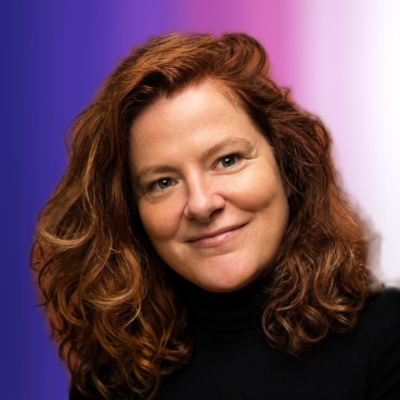
Sarah Morgan
CEO
Sarah founded Earthlight to bridge human biology and enterprise economics. Her work integrates circadian science, performance modeling, and strategic capital alignment, positioning environmental decisions as measurable drivers of workforce output and financial resilience.
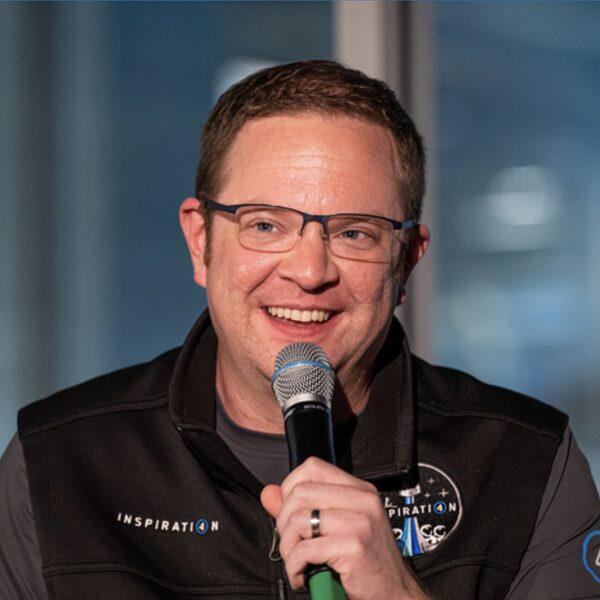
Chris Sembroski
Technical Brand Lead
Chris is responsible for delivering engaging technical content and fostering community engagement around Earthlight's innovations. He connects circadian science with industry thought leaders, translating complex concepts into accessible insights that drive adoption and collaboration.
Common questions
Circadian lighting, in plain terms
What is circadian lighting?
Circadian lighting, also called human-centric lighting, is lighting designed around the body's 24-hour internal clock: brighter, cooler light during the day and warmer, dimmer light in the evening, instead of flat, unchanging light. It supports sleep, alertness, mood, and overall wellbeing.
What is the ROI of circadian lighting?
The return shows up in human outcomes that carry financial weight: fewer falls in senior care, shorter stays in hospitals, fewer sick days in offices, safer night shifts in industry. Earthlight models these effects for a specific building and translates them into the numbers operators and CFOs use.
What is human-centric lighting?
Human-centric lighting is another term for circadian lighting: lighting designed for the people under it, not just for visibility or energy code. It accounts for how light timing and intensity shape human biology across the day.
Does circadian lighting actually work?
It is grounded in established circadian science and recognized standards such as the IES and the WELL Building Standard. Earthlight makes the assumptions behind every estimate explicit, so teams can see exactly how the human and financial impact is calculated.
How does Earthlight model lighting ROI?
Earthlight is decision-support software, not a lighting product. It maps how light moves through a space across the day, quantifies the circadian impact on the people in it, and converts that into operational and financial terms, so good lighting design survives value engineering.
Align biology, capital, and performance.
Tell us about your building and what you’re working toward. We’ll get back to you within one business day. Prefer to talk? Book a conversation.